


.svg) By - Gaurav Vermma
By - Gaurav Vermma  Featured Events
 May 25, 2026
Why QR Code Photo Sharing Is the Best Guest Experience Upgrade in 2026
Events have a universal problem. Guests create extraordinary content, candid shots, spontaneous group photos, perfectly timed moments that no hired photographer happened to catch. And then that content disappears into individual camera rolls, never to be seen by the organiser, the client, or anyone else who cared about the event.
The solution to this problem is simpler than most event professionals expect. And in 2026, it’s becoming one of the most impactful single additions to any event’s guest experience.
What QR Code Photo Sharing Actually Does:
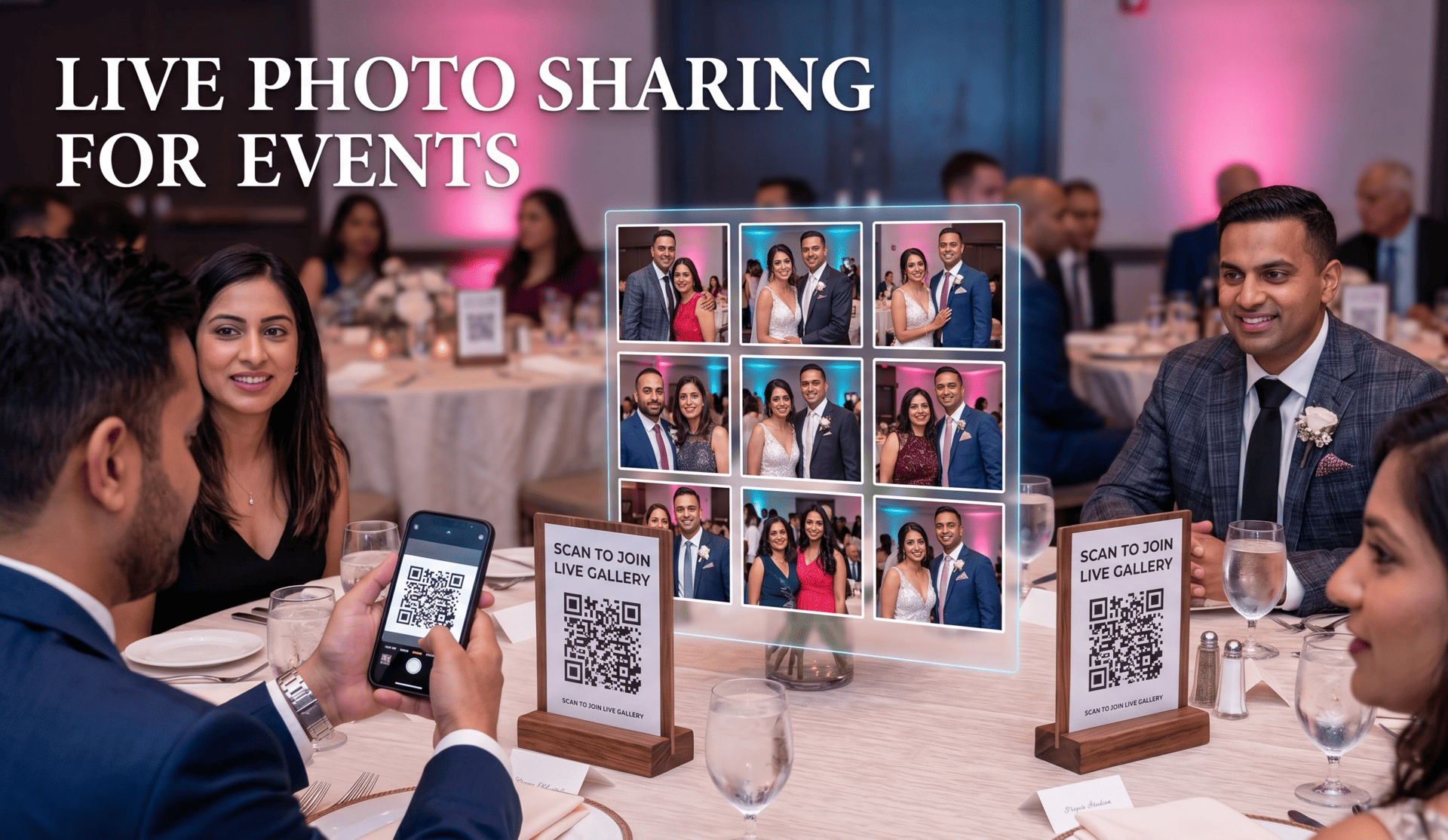
The concept is elegant in its simplicity. Before the event, you generate a QR code linked to a shared photo gallery. At the event, the code is displayed, on tables, screens, printed signage, or shared digitally with guests. Guests scan it with the camera already on their phone and contribute their photos to the shared album instantly, without downloading an app or creating an account.
As the event progresses, the gallery builds in real time. After the event, the organiser and client have immediate access to a complete, multi-perspective visual record, combining the professional photographer’s coverage with everything the guests captured.
What makes this genuinely powerful is the scale and variety of the guest contribution. A room of two hundred guests, each taking an average of ten photos, creates two thousand images from angles, moments, and perspectives that no single photographer could replicate. The collective photography of the room tells a richer story of the event than any individual lens.
Why This Is the Guest Experience Upgrade Thar Sticks:
Event professionals evaluate many potential upgrades — entertainment additions, catering enhancements, and event improvements. Most create an impact during the event, but very few continue delivering value after the event ends.
Photo sharing is different. Contributing to a shared gallery is interactive, social, and helps guests feel more connected to the event itself. But the value extends well beyond the event in ways many other upgrades do not.
-
-
- The client receives a complete visual record of the event
-
-
-
- Guests have a reason to reconnect after the event
-
-
-
- The organiser gains authentic portfolio and marketing content
-
This combination of real-time engagement and long-term value is part of what makes QR code photo sharing such a practical upgrade for modern events.
The Practical Case for Event Professionals:
Beyond the guest experience argument, there’s also a strong operational case for integrating photo sharing into your event toolkit.
-
-
-
- It creates marketing content you can actually use. Authentic guest moments tend to perform far better than staged promotional photography for event marketing.
- It reduces post-event content chasing. Instead of collecting photos from multiple guests and vendors afterward, a shared gallery gathers everything automatically during the event.
- It strengthens the post-event client relationship. Sending clients a gallery shortly after the event adds value and helps extend the experience beyond the event itself.
- It’s easy to implement. A QR code displayed at the event is often all guests need to instantly upload and share photos.
-
-
Platforms like GUESTPIX help simplify the process by centralising uploads and making galleries easier to manage. Using an event photo sharing app gives organisers a practical way to collect, organise, and share event memories without adding unnecessary complexity to the event itself.
Making It Work Across Different Event Types:
The flexibility of QR code photo sharing is part of its main appeal. It adapts naturally to virtually every event format:
-
-
- Corporate events and conferences — placed on tables or at registration, generates coverage of the full event from attendee perspectives that official photographers often miss.
- Weddings — the application is intuitive and beloved; guests are already photographing everything, and a shared gallery means the couple actually receives those photos rather than hoping guests remember to send them.
- Charity galas and fundraising events — the gallery becomes a story-telling tool for post-event donor communications and annual reports.
- Brand activations and product launches — authentic attendee photography from a product launch event is more credible marketing content than anything staged, and the gallery can be curated for immediate use.
- Private celebrations — milestone birthdays, anniversaries, reunion events, the gallery becomes a keepsake that the host can share with everyone who attended.
-
The Moderation Element:
For professional and corporate events, content moderation matters. A platform that allows the organiser to review photos before they’re visible in the shared gallery gives you control without adding significant workload, flagging anything inappropriate before it becomes part of the official record.
For social events where a lighter touch is appropriate, a more open gallery builds faster and creates a more dynamic real-time experience.
The ability to adjust moderation settings based on event type and audience is one of the features worth verifying before choosing a platform.
Conclusion
The events industry is always looking for upgrades that deliver genuine value, to clients, to guests, and to the organiser’s own business. Most upgrades deliver in one of those dimensions. QR code photo sharing delivers in all three simultaneously.
In 2026, it’s moved from early adopter territory to a practical standard that guests notice the absence of. Event professionals who haven’t integrated it yet are leaving value, and differentiation, on the table.
The setup is minimal. The return is consistent. And the guest experience impact is one of the most immediately felt of any technology addition available to event professionals right now.